
DeKalb Projected and Actual Release
A projected date is a calculation, not proof that a person walked out. Tennessee records may refer to release eligibility, sentence expiration, or an actual release. Eligibility is the first point at which release may be considered under the sentence and governing law. Sentence expiration is the calculated end of the sentence. Actual release is the custody event recorded by the jail or correction agency. Those dates may differ, and the label beside a date matters as much as the number itself.
A person awaiting trial at DeKalb County Jail usually has no computed prison release date. The next custody change may depend on bond conditions, a dismissal, a plea, a judgment, or another court order. A sentenced TDOC prisoner has a formal sentence calculation, but even that does not make a future date certain. Parole review, a detainer, and approval of a release plan may stand between eligibility and departure.
Find DeKalb Projected Release Dates
Begin with the agency that holds the person. A DeKalb County jail record and a Tennessee prison record use different clocks. The sheriff's roughly weekly iSOMS report may show an actual Release Date/Time, but it does not publish a stable projected-date field. TDOC's Felony Offender Information Lookup, known as FOIL, covers current and former felony offenders in TDOC custody or supervision. Its public description promises sentence and release information, yet it does not promise a field literally called “Projected Release Date.” Read the exact label shown on the selected record.
- Confirm whether the person is in DeKalb County Jail, TDOC custody, another county, or federal custody.
- For TDOC, open the FOIL search and search by name, TDOC ID, or State ID.
- Match the record with supported identifiers, then note status, location, offenses, sentence details, hearing status, and the precise release-related label.
- For a county sentence, ask the sheriff and the DeKalb Circuit Court Clerk for the judgment, jail calculation, and release entry.
- Confirm an actual exit with the responsible agency instead of treating an eligibility date as a completed release.
The full county search and record-request path is covered on the DeKalb County released inmate search. That route is useful when a name has vanished from a jail view or when the custodian is unclear.
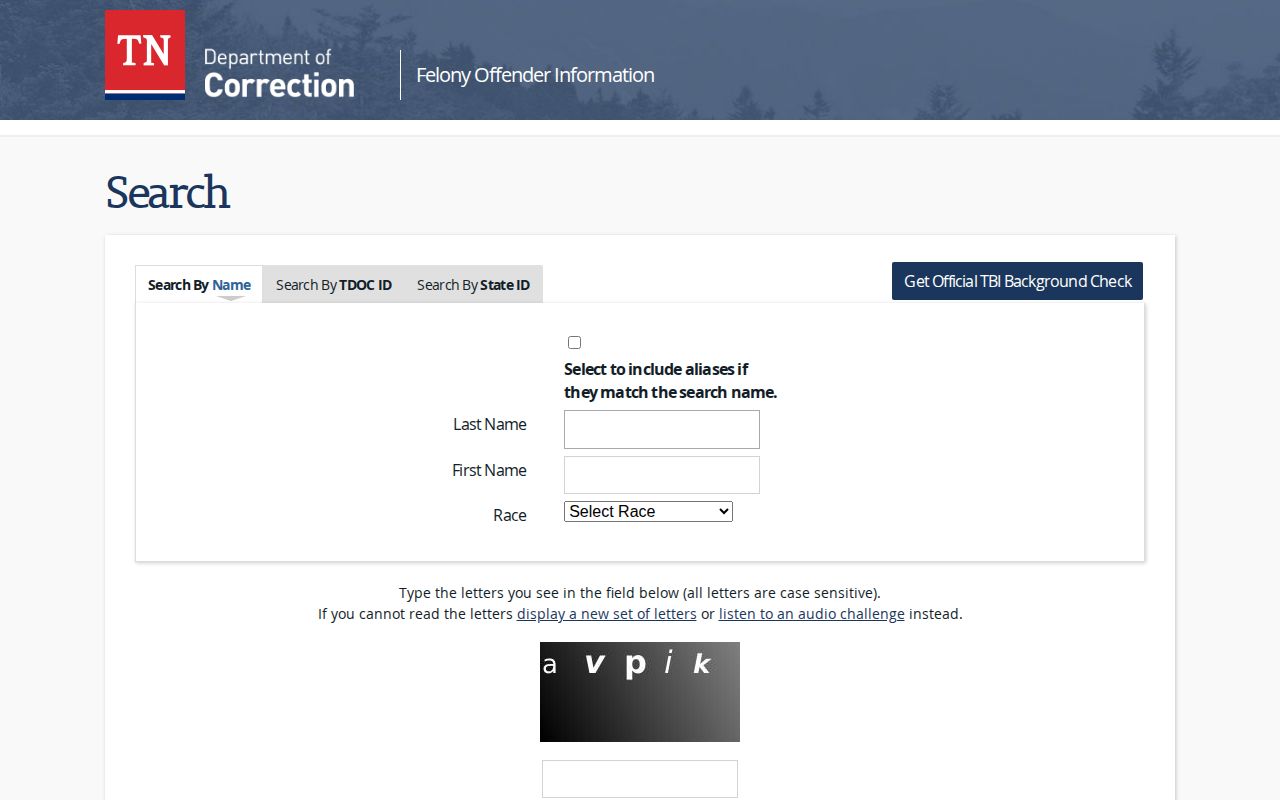
The official TDOC FOIL interface shows the name and identifier search routes used for a state record.
TDOC Fields for DeKalb Releases
FOIL offers Name, TDOC ID, and State ID search tabs. A name search uses last name and first name, with aliases and race available as narrowing fields, followed by CAPTCHA. A matching result may contain a photograph, incarceration, probation, parole, or inactive status, a location, offenses, sentence data, parole-hearing status, and release information. “May” is important. The official explainer does not guarantee the same set of labels on every result.
| Field or status | What it can establish |
|---|---|
| Incarceration location | The person remains in TDOC custody at the listed site. |
| Parole | Conditional community release is active before sentence expiration. |
| Probation | Court-ordered community supervision is active, sometimes after split confinement. |
| Inactive | No active TDOC incarceration or supervision is listed, but the status alone does not explain how it ended. |
| Release information | Use the exact displayed label to distinguish eligibility, expiration, and an actual release entry. |
TDOC warns that FOIL data may not be accurate, complete, or current. For an end date or release type that has legal importance, request the discharge record or confirm with the originating court. A photograph can help avoid a same-name match, but it cannot prove the date or reason for release.
Note: MyTN offers mobile access to Offender Search, but it is a state tool rather than a DeKalb County jail application.
Tennessee Credits and DeKalb Dates
Tennessee release calculations depend on the sentence, offense, offense date, and the law that applies to that case. TCA §40-35-501 governs release eligibility through several offense-specific and date-specific rules. TCA §41-21-236 governs sentence-reduction credits. Credits may affect a calculation only when the governing law permits them. Discipline, restoration, and later correction of the calculation can change an expected date.
The phrase “85 percent rule” is often used too broadly. For certain serious offenses, older provisions allowed no more than a fifteen-percent sentence reduction where credits were authorized, which created an 85-percent service floor. That is not a single rule for all Tennessee convictions. Later truth-in-sentencing provisions include offense-specific 100-percent requirements for specified offenses committed on or after July 1, 2022. The statute and facts of the sentence control.
- Release eligibility
- The first lawful point at which release may be considered. It is not a guaranteed exit date.
- Sentence expiration
- The calculated end of the sentence, subject to the governing sentence structure and official computation.
- Sentence-reduction credit
- A credit that may reduce eligible service when Tennessee law authorizes it.
- Actual release
- The recorded event when a custodian transfers or discharges the person.
Do not subtract fifteen percent from a sentence or create a date by hand. Multiple counts, jail credit, consecutive or concurrent terms, amendments, and statutory classifications make that shortcut unreliable. Record the date TDOC displays, its label, and the time of the search.
Why DeKalb Release Dates Change
A future date can move even when the identity match is correct. Some changes alter the sentence calculation. Others do not change the sentence at all but prevent release to the community. A detainer, for example, is a request or authority for another custodian to receive the person. The first agency may record a release while a second agency begins custody.
| Factor | Effect on the expected date |
|---|---|
| Credit award, loss, or correction | Changes the official calculation when the law permits that credit. |
| Court order or amended judgment | Can change sentence terms, custody credit, or the authority for release. |
| Parole decision | May authorize conditional release, but does not itself prove physical departure. |
| Release-plan approval | TDOC requires an approved plan before a person granted parole leaves prison. |
| Detainer or hold | Can send the person to another county, state, federal, or immigration custodian. |
| Database timing | A valid event may appear after the first online check because systems update at different times. |
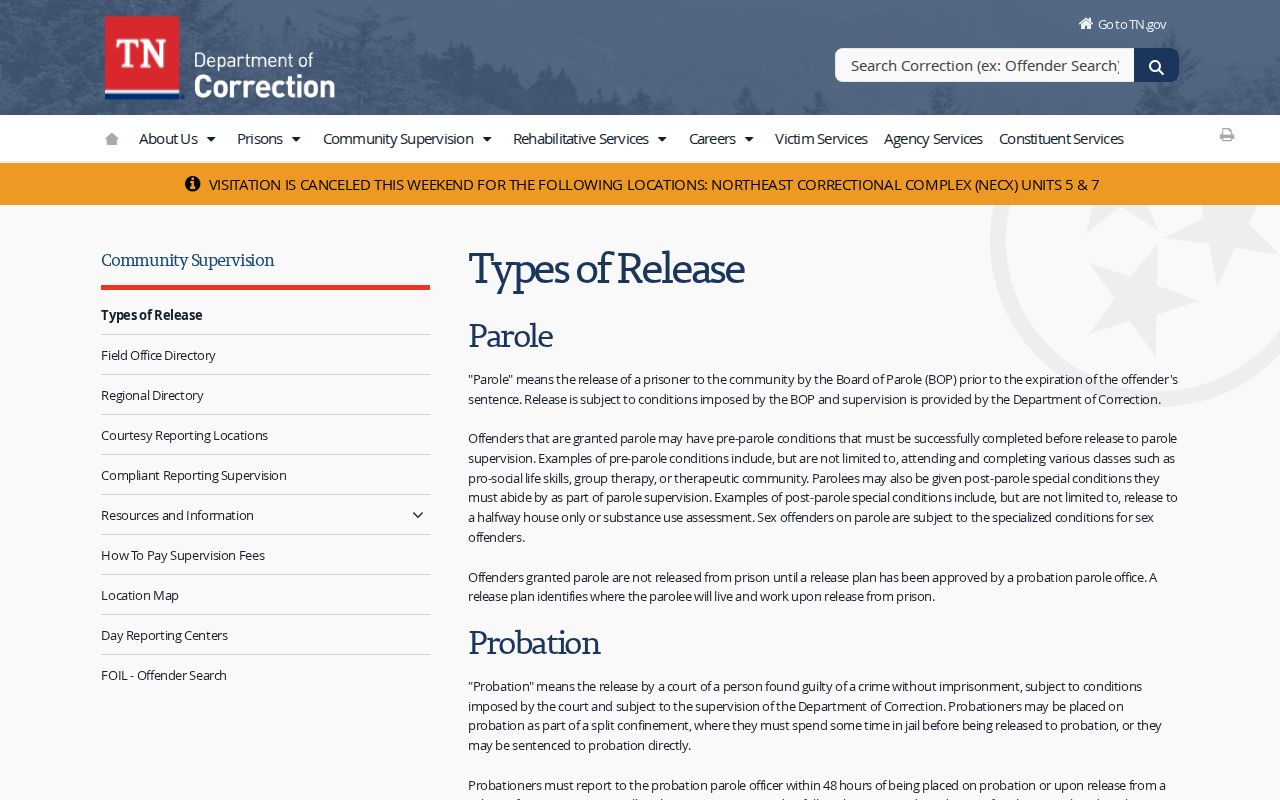
The TDOC release-types page separates parole, probation, determinate release, and other routes.
DeKalb Jail Sentence Release Dates
Short county sentences require a local record path. Sheriff Patrick Ray's department produces the local custody record. DeKalb's weekly iSOMS report example can show intake reason and the actual Release Date/Time entered before the report was printed. A sampled report includes a weekender or time-to-serve entry, but one example does not establish a countywide good-time policy, standard weekend exit, or release hour. No official DeKalb County good-time rule or weekend-release procedure was verified.
Ask the DeKalb Circuit Court Clerk for the judgment and sentence, including any custody-credit terms. Then ask the sheriff for the jail calculation and the release sheet. The court record can show what was ordered. The sheriff record is better evidence of the administrative exit. If bond or a later order replaces the expected sentence path, the case file may explain the authority while the release timestamp confirms the event.
A blank release field in an old weekly report does not mean the person remains jailed. It only means a release was not printed in that snapshot. Booking and census logs have a five-year retention schedule, so a narrow records request is the better historical route.
DeKalb Parole Is Not Release
Parole adds several checkpoints. Eligibility can lead to a hearing. A hearing officer's recommendation is nonbinding, and the Board must reach the required vote for a final decision. Conditions can still apply. TDOC also states that a release plan must be approved before prison departure. A rescission or detainer can stop or redirect the expected release.
The Tennessee Board of Parole publishes hearing schedules, not a separate verified public decisions database. Use FOIL for the person's parole-hearing status, then confirm a final decision with the Board when needed. Most of all, wait for the TDOC or VINE custody change and the dated release record. A scheduled hearing and a favorable vote are significant, but neither is the jail-door event.
Note: Probation after split confinement requires prompt reporting, so community release may begin a new supervision duty rather than end the case.
Confirm DeKalb Actual Release Dates
Use more than one record when the distinction matters. For TDOC, preserve the FOIL status, the precise date label, and the time checked. Register through VINE Inmate Check for a custody-change notice. Then request the formal release or discharge entry if the type, destination, or sentence-expiration date is needed. TDOC archived records accepts detailed requests for former offenders and supplies a quote when archive work has a fee.
For DeKalb County Jail, call the sheriff and ask whether the Release Date/Time is the physical exit time and whether the destination was the community or another custodian. Pair that response with the court order when release authority matters. For a federal sentence, the BOP locator may show Released or Not in BOP Custody and a date, but that only proves departure from BOP custody.
A formal state record can be requested when the web result is too brief. TDOC Records Management accepts an archived-record request with the full offender name, TDOC number, birth date, requester contact information, and a precise description of the records sought. Ask for the release or discharge date, release type, destination or transfer, sentence expiration, and any releasable notice that bears on the calculation. TDOC quotes archive-search charges after the work is complete, so a requester should not prepay an assumed amount. Questions about that route go to 615-253-8079.
What if a projected date passed? Recheck the record's scope and update time. Look for a detainer, amended court action, credit change, unresolved plan, or transfer. Then contact the agency that owns the calculation. A stale future date should not be treated as proof of release or proof of an error.
Public Record Search
Sponsored Results