
Understanding DeKalb County Releases
DeKalb County Jail is the only verified detention facility physically located in the county. Sheriff Patrick Ray leads the DeKalb County Sheriff's Department, which operates it. A release from that jail closes one period of county custody, but it does not always mean freedom from all custody. The person may go home after bond, a court order, dismissal, or completion of a jail term. The same local event can instead be a transport to the Tennessee Department of Correction, another county, federal custody, or another authority. That distinction controls which record should be searched next.
The county's most useful published source is a sheriff-generated weekly iSOMS report called Intake Press Release With Image. It is an intake report, not a live roster and not a release-only list. No verified DeKalb 24-hour or 72-hour feed and no Tennessee DeKalb sheriff app were found. A populated Release Date/Time field is direct evidence that the jail recorded an exit. A blank field means only that no release was printed in that snapshot. It cannot show whether the person remained jailed after the report was produced.
- Release
- An exit from one named custodian, whether to the community or another authority.
- Discharge
- The formal end of a custody or supervision status shown by the responsible agency.
- Time served
- A court or sentence outcome in which credited confinement satisfies the ordered term.
- Detainer
- A request or hold that can send a person to another custodian after the first agency releases them.
DeKalb County Release Types
The release label and destination matter more than the fact that a name disappeared. DeKalb's weekly report can establish the time of a recorded jail exit, yet it does not publish a plainly labeled reason. The underlying release sheet, a court order, or the receiving system supplies the missing context. The following distinctions keep a county release from being mistaken for a full discharge.
- Bond or court order
- The jail may release the person after stated conditions or a judicial direction are met. Verify with the sheriff release sheet and court order.
- Dismissal
- A charge may end without a conviction. Pair the disposition with the jail Release Date/Time because the docket may omit the exit time.
- Time served
- The jail term may be complete after the court and jail apply the lawful calculation. Check the judgment, jail computation, and release record.
- Parole or probation
- The person is in the community under conditions. TDOC FOIL, Board records, and District 31 can address the applicable status.
- Transfer or detainer
- DeKalb custody ended while another agency's custody began. Search the named receiving jail, TDOC, BOP, USMS, or ICE route.
Note: The researched report samples show varied timing, but they do not establish standard release hours or a weekend rule.
DeKalb County Release Record Fields
A useful release record answers four questions: who left, which custodian released the person, when the event occurred, and where the person went next. Names alone are weak identifiers. Booking, court, TDOC, SID, federal, or immigration numbers should be used when the relevant system supplies them. DeKalb's weekly PDF gives strong local identity and time fields. A focused request for the underlying record can add the reason and destination.
| Field | What it shows |
|---|---|
| Name and stable identifier | Connects the event to the correct person and reduces same-name errors. |
| Intake Date/Time | Marks the start of the booking shown in that report. |
| Release Date/Time | Records the county jail exit entered before the report was printed. |
| Facility or custodian | Identifies which agency's custody ended. |
| Release type or reason | May distinguish bond, court order, sentence completion, parole, or another basis. |
| Destination or receiving agency | Shows whether the person entered the community or another custody system. |
| Charge and court context | Connects the booking to the correct case without proving conviction or release authority by itself. |
The formal TDOC release-notice inventory is broader for state cases. It includes offender name, TDOC number, conviction date and county, offense, type of release, release date, sentence-expiration date, and intended city and state. Those fields describe a TDOC event, not a DeKalb County Jail record. Each record must retain its agency label.
Was a DeKalb Release Bonded?
DeKalb's iSOMS report can place a bond amount beside an eventual release timestamp. The local General Sessions docket can also show cash or surety bond type and a bonding company. Neither document, standing alone, proves that payment of bond caused the exit. A fast release should not be labeled a “bond out” merely because both fields appear.
Pair the timestamp in the weekly DeKalb intake report with the actual bond or release order. Ask the sheriff for the release reason and ask the correct clerk for the order and disposition. A judge may change an order, conditions may be fulfilled later, or a second authority may take custody. That is why the event, legal authority, and destination should be read as separate facts.
Note: Bond amount describes a court or booking field; it does not by itself establish payment, release, or present status.
DeKalb Release Property Receipt
Online rosters and weekly links can vanish, but one unusual retained record can still corroborate an actual exit. The CTAS sheriff records schedule identifies the “Receipt for Property Returned to Inmates on Release” as a permanent record. It is a witnessed, itemized receipt tied to property returned at release. DeKalb has not published a property counter, pickup method, or release-door procedure, so those details must not be assumed.
A narrow records request may ask whether the applicable release-property receipt exists and is available. The request should name the person, intake range, booking or case number if known, and the exact record series. The receipt can support that a release process occurred. It does not necessarily state the legal reason, destination, or whether another agency took custody, so it should be paired with the release sheet and any transport notation.
Request DeKalb County Release Records
Tennessee has no central public-record portal for every release. The request goes to the office that created or keeps the record. For a DeKalb booking, phone the sheriff first to identify the Public Records Request Coordinator and current delivery method. The county site did not publish a sheriff request form, a named coordinator, a local fee schedule, or promised release-record hours, so email filing and fixed local prices should not be assumed.
- Give the full name, known aliases, intake date range, and booking or case number. Use an approximate birth date only when needed to distinguish the person.
- Ask for the booking or intake record and the field or document showing release date and time.
- Request the release type, reason, destination, receiving agency, and transport or detainer notation when relevant.
- Ask for an electronic copy if available and request a cost estimate before chargeable work begins.
- If TDOC kept the record, use its archived-record request and ask for the discharge date, type, destination, sentence expiration, and releasable photo.
100 Public Square
Smithville, TN 37166
615-597-4935 or 615-597-4043
Fax: 615-597-2536
Call first because records-counter hours were not published.
Under TCA §10-7-503, records should be made promptly. If prompt production is not possible, the custodian has seven business days to produce the record, deny access in writing with the basis, or state when production will occur. Tennessee citizenship or proof may be required. Inspection is generally free unless another law applies.
The OORC guideline is 15 cents per letter or legal black-and-white page and 50 cents for a color page. Reasonable labor may be charged after the first hour based on the employees needed. The agency's adopted policy controls and may waive costs. These statewide figures are not a published DeKalb sheriff fee promise. Electronic per-page fees apply only when paper copies were actually made under the cited state guidance.
DeKalb Release Record Law
The Tennessee Public Records Act, TCA §§10-7-501 and following, supplies the access framework for DeKalb County records. Access remains subject to exemptions, confidentiality, redaction, citizenship requirements, and the custodian's lawful policy. Juvenile records are excluded from the county clerk's broad public-access statement. Medical jail files remain confidential even though a retention rule requires the agency to keep them.
Retention and web access are not the same. The CTAS sheriff records schedule calls for inmate census and booking logs to be kept five years. Identification files with photos and fingerprints remain until death or presumed death at one hundred years after birth. Confidential medical records are kept ten years after release, and the release-property receipt is permanent. The exact record series and disposal rule still control each request.
Note: A report disappearing online does not mean the sheriff destroyed the underlying booking, release, identification, or property record.
Expunging DeKalb Release Records
Expungement begins in the court where the charge originated. Under TCA §40-32-101, dismissed, nolle prosequi, no-true-bill, not-guilty, and arrest-and-release-without-charge routes can qualify without cost, while diversion and eligible convictions have added rules. The person should identify every charge and obtain the docket or case information before seeking relief. A dismissal with costs may require costs to be resolved or waived, and a retired matter must first become dismissed.
After the process is complete, the court sends its order to agencies that can include the arresting agency, DeKalb County Jail, TDOC, and TBI. This originating-court path is the documented way to change public arrest and booking records. It is not automatic. The statutory definition contains exceptions, and registry removal follows separate law. A certified expungement order and charging document help track whether each named agency received the instruction.
DeKalb Jail Plans and Releases
Local officials have considered replacement-jail options at the current site and at a green site. A Smithville Review planning report said one option was estimated to cost $8.6 million to $9.3 million less, depending on bed count. This is budget and planning history. It is not evidence that a new detention facility opened, moved, or took over release processing.
The current source map still identifies one verified DeKalb detention facility and the official Public Square sheriff contact. Until an authoritative county source reports a completed change, searches and requests should use that office. Proposed capacity or site comparisons must not be turned into claims about current beds, routine release volume, release hours, or where a person exited.
Search DeKalb County Released Inmates
Start with the last known custodian. That choice avoids the common error of treating “not on a jail list” as “free.” A source should be recorded with its agency, exact field label, report or search date, and stable identifier. If two systems differ, compare their scope and “as of” time before deciding either is wrong.
- Check dated DeKalb weekly iSOMS reports near the intake. Read Intake Date/Time, Release Date/Time, agency, court date, and print timestamp together.
- Call the sheriff when the field is blank, the report is stale, or the release reason and destination matter. Request the retained release sheet when needed.
- Search the correct DeKalb court file for the disposition, judgment, bond or release order, and custody instruction.
- Use TDOC FOIL when a felony sentence, state transfer, parole, probation, or prior TDOC custody appears in the record.
- Check TN SAVIN or VINE for the selected custodian's current status and reported changes, then follow a transfer into the next system.
- Use BOP for federal prison records, the holding facility and federal docket for USMS pretrial custody, or ICE only when the record supports that custody path.
- Use the sheriff or TDOC archived-record request when the online source is missing, old, or insufficient for the exact event.
For a 24-hour interval, filter the newest weekly report by its print time and populated release fields. This method cannot make an old report current.
TDOC DeKalb Release Lookup
TDOC's Felony Offender Information Lookup, or FOIL, covers felony offenders who are currently or formerly in TDOC custody or supervision. It is useful after state prison, parole, probation, or a DeKalb transfer into TDOC. It ordinarily will not cover a person whose only event was a short county detention with no state custody or supervision. FOIL may show a photograph, status, location, offenses, sentence information, parole-hearing status, and release information.
| Search route | Input | How to use it |
|---|---|---|
| Name | Last name, first name, optional aliases and race, plus CAPTCHA | Compare identity details before opening a result. |
| TDOC ID | Department offender number | Prefer it when known because it reduces same-name mistakes. |
| State ID / SID | State identification number | Use the exact number from a reliable record. |
| Result review | Status, location, offense, sentence, hearing, and displayed release fields | Preserve each actual field label and date without renaming it. |
The official description does not promise a field literally named “Projected Release Date” or “Tentative Release Date.” Eligibility, sentence expiration, and actual release are different. “Parole” means conditional community supervision. “Probation” is court-ordered supervision. “Inactive” means no active listed TDOC custody or supervision, but does not explain the closure by itself. An incarceration location means leaving DeKalb was a transfer rather than community release. MyTN also provides mobile access to Offender Search under Public Safety, but it is a statewide TDOC channel, not a DeKalb sheriff app.
The official TDOC FOIL explanation shows the scope and possible fields:
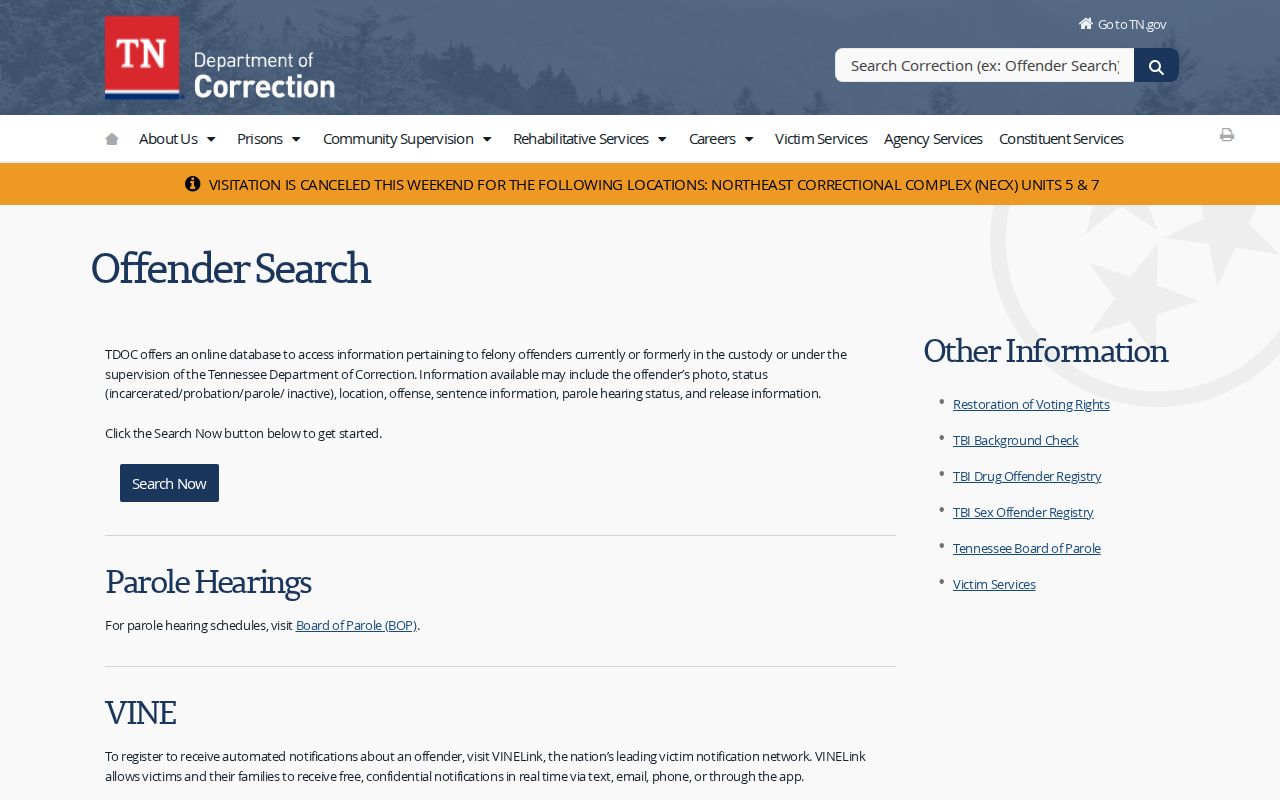
This screen helps set the right expectation: FOIL is a state felony source, not a complete DeKalb County booking archive.
Note: FOIL warns that its information may not be accurate, timely, or complete, so confirm key details with the originating office.
Route DeKalb Release Court Records
One DeKalb County clerk serves Circuit, Criminal, General Sessions, and Juvenile matters, though juvenile records are excepted from general public access. Smithville and Alexandria have separate city court clerks. This split explains why a county docket search can miss a municipal case. Start with the arresting or citing agency and case number, then ask which clerk owns the matter.
The DeKalb Circuit Court Clerk keeps the durable county case record. Ask first for disposition and judgment or sentence. A bond order can authorize release without proving that conditions were met. A dismissal can explain why no sentence followed without supplying the jail-door time. Pair the legal record with the sheriff's release timestamp.
Question: Why can a court result and jail record differ? The court shows legal authority, while the jail records the custody event. An order may precede processing, and a transfer can follow the county exit.
DeKalb Releases With Detainers
TDOC's own release-notice policy recognizes release by detainer to a Tennessee county facility. The same principle works in the other direction: a person can leave DeKalb County Jail and enter state, federal, another county's, or another authority's custody. The release record should be checked for terms such as hold, detainer, transport, transfer, and receiving agency.
Use the receiving system only when the facts point there. FOIL covers TDOC. BOP covers federal prison custody and former BOP records. The USMS tracking system is not a public person locator, so federal pretrial status is checked through the named holding facility, the USMS district, and the federal docket. The ICE Online Detainee Locator is appropriate only when immigration custody is supported. A negative ICE result is inconclusive because coverage and identity limits can also cause no match.
DeKalb Release Alerts and Supervision
TN SAVIN is the county-jail notification layer for all Tennessee sheriffs. Search the selected person by name or booking identifier, open Record Details, and read the custodian and status before interpreting a release or transfer. Registration can provide later phone, email, text, or TTY notices. VINE is best used for current status and notification, not as a permanent certified release archive.
TDOC separately participates in VINE for state offenders. A DeKalb county alert may therefore need a second check in TDOC VINE or FOIL if it describes a transfer. For post-release supervision, the Board of Parole makes parole decisions while TDOC Community Supervision operates field offices. DeKalb is served by District 31 in Cookeville. The detailed verification route appears on the Post-Release Supervision page.
The TBI Sex Offender Registry is an offense-limited source that may show a photo, status, reporting details, offense, and agency. It is not a general release search and can include people who remain incarcerated. Registry status cannot replace a jail release sheet or TDOC discharge record.
Federal DeKalb Release Records
The Bureau of Prisons locator applies only to federal prison custody. It can be searched by BOP, DCDC, FBI, or INS number, or by name. Results can show a register number, demographic identity fields, release date, and location. “Released” or “Not in BOP Custody” with no facility means the person left BOP custody on the shown date. It does not rule out state, local, immigration, or supervised-release status.
The BOP Inmate Locator provides the federal search screen:
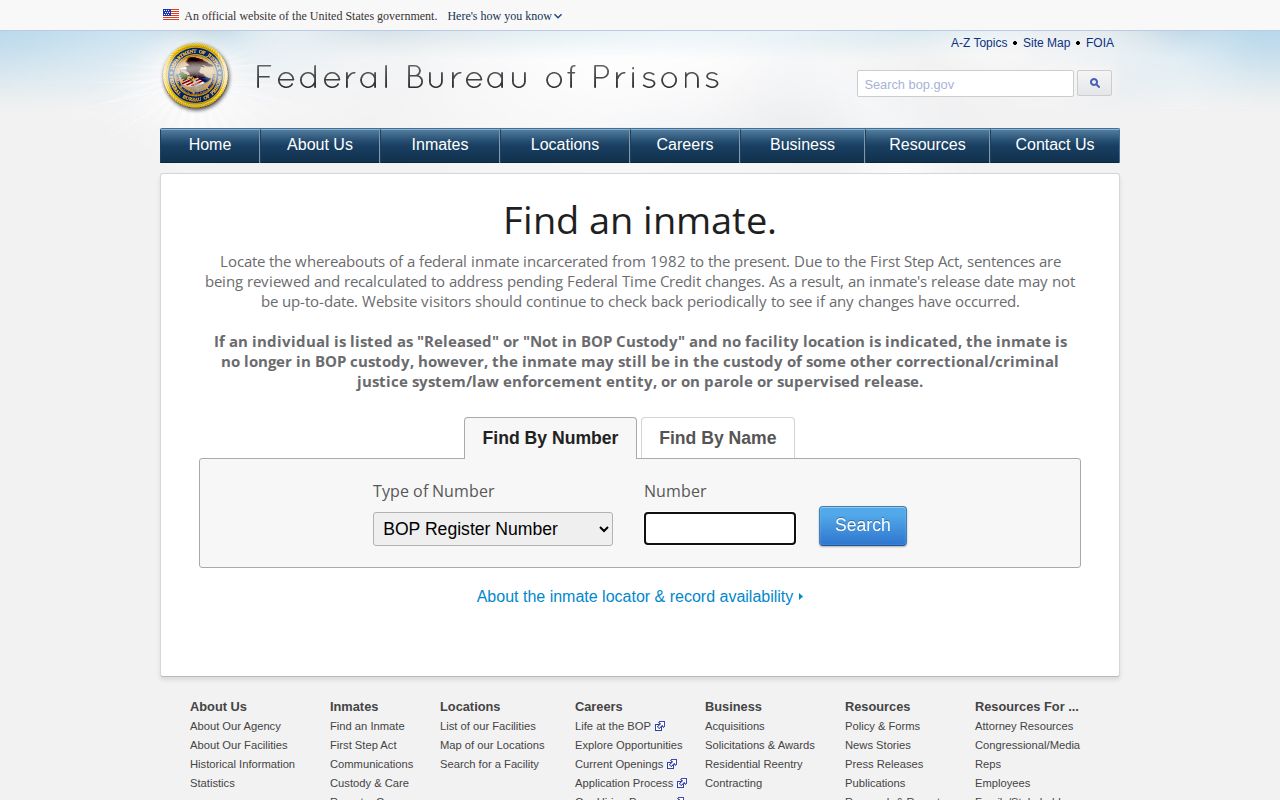
The displayed agency wording must be read literally. “In Transit” is not release, “Unknown” means the term is undetermined, and a deceased person can appear through the release-date field. Online BOP data generally covers people released after 1982. Older federal records may require the National Archives, while deeper former-inmate records may require a focused BOP records request.
Note: No federal prison, dedicated ICE center, or verified federal detention facility was found inside DeKalb County.
Compare DeKalb Release Sources
Each system answers a narrow question. A current-custody source is useful after a transfer, but it is not the place where a completed county release record necessarily remains. The source date and custodian should always travel with the finding.
| Source | Best use | What it cannot prove alone |
|---|---|---|
| Weekly DeKalb iSOMS report | County intake and a populated jail Release Date/Time visible at print | Release reason, destination, or present status years later |
| Sheriff release sheet | Historical county exit details and receiving agency when recorded | The later status in another system |
| TDOC FOIL | Current or former state felony custody and supervision | Every county-only booking |
| Court file | Bond order, disposition, judgment, sentence, and expungement | The exact physical exit time in every case |
| TN SAVIN or VINE | Current status, custody changes, and notifications for one custodian | A certified permanent release archive or freedom from all custody |
| BOP or ICE | Agency-specific federal prison or qualifying current immigration custody | Release from all state, local, or supervised status |
DeKalb County Release Facility
Only DeKalb County Jail was verified as a physical detention facility in the county. State prison, federal prison, and immigration systems remain possible later custodians, not extra local facilities. The individual release or transfer record controls where the search moves.
- DeKalb County Jail: county bookings may end in community release, TDOC transfer, another county, federal custody, or another named authority.
The official DeKalb County sheriff page confirms the current agency identity and jail contact:
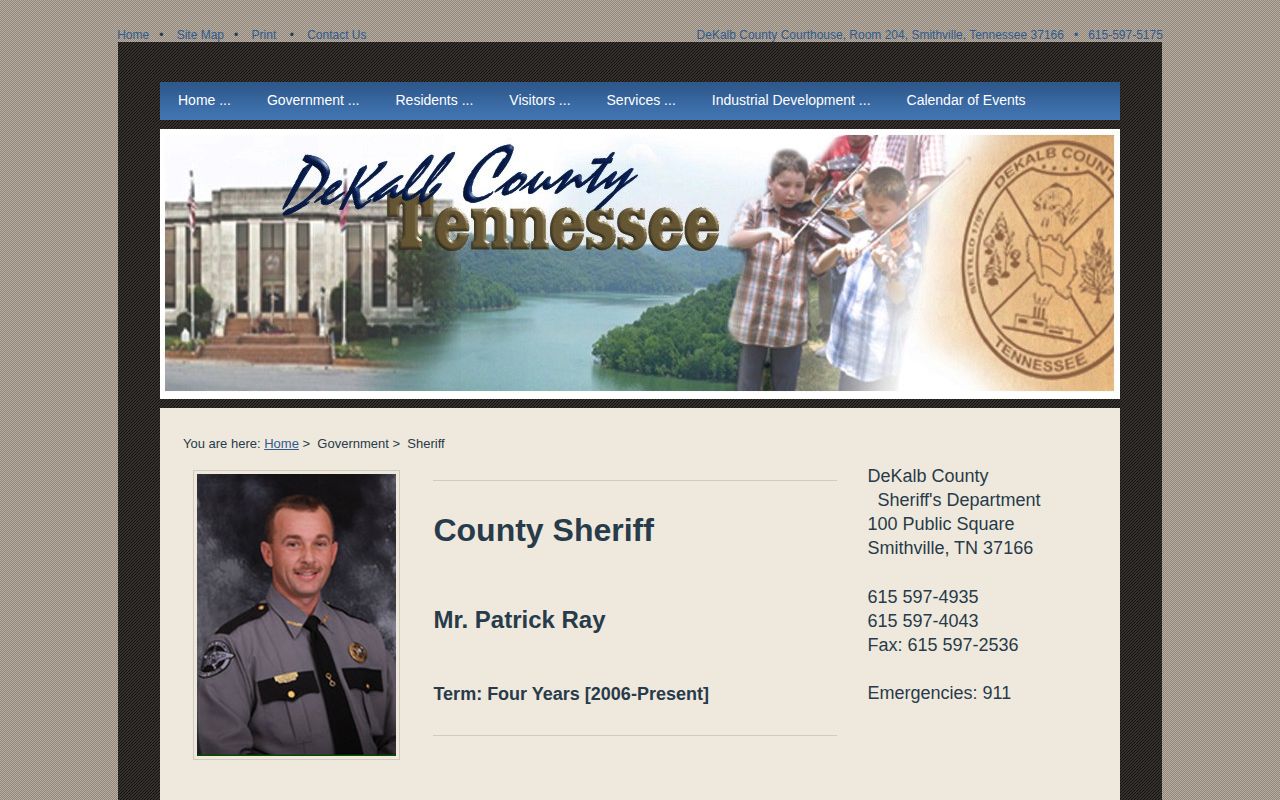
This county source should be used before similarly named DeKalb jail pages from Georgia, Alabama, Illinois, or Indiana. Their rosters, apps, forms, and release lists do not apply in Smithville, Tennessee.